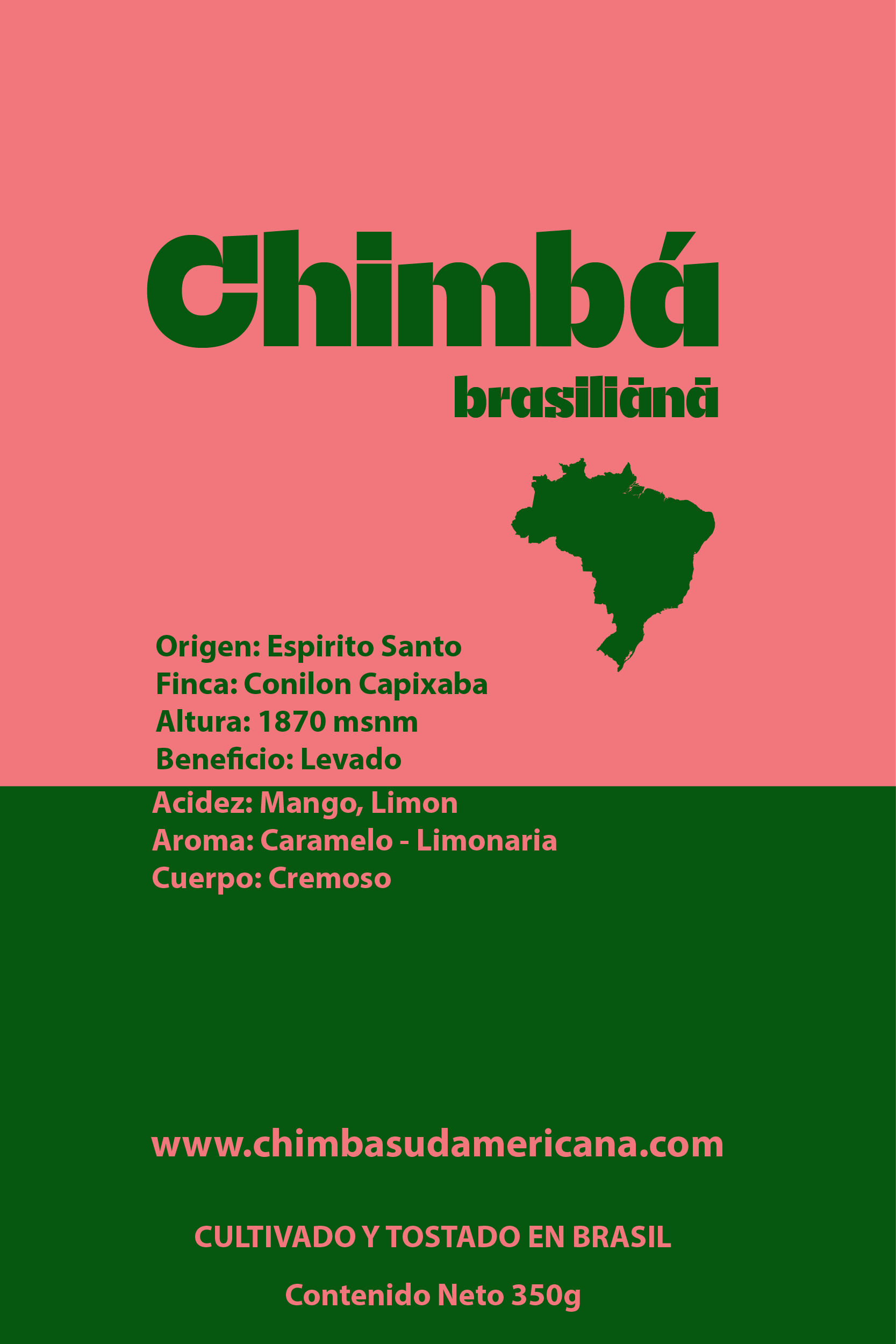
Brazil, the world's largest coffee producer
Brazil has been the world's largest coffee producer for a very long time. The scale is huge, and Brazilian coffee ends up almost everywhere: in espresso blends, in supermarket coffee and, more and more, on specialty menus.
Unlike Colombia, which grows arabica, Brazil grows both major species: arabica and canephora, widely known as robusta and called conilon in Brazil. And unlike the Andes, much of Brazil's coffee grows at moderate altitudes, often somewhere around 800 to 1,300 meters, on gentler land that even allows mechanical harvesting in some areas.
Being in the southern hemisphere, Brazil harvests roughly around the middle of the year.
Brazil's coffee regions
Coffee grows across several states, but two names keep coming up:
- Minas Gerais: the country's biggest coffee-producing state, mostly arabica. It includes well-known areas such as Sul de Minas, Cerrado Mineiro and Matas de Minas, each with its own climate and landscape.
- Espírito Santo: on the coast, the leading producer of conilon, though its mountain areas grow arabica too.
- Other states, such as São Paulo and Bahia, fill in the map with a wide range of profiles.
Among the most common arabica varieties in Brazil are Mundo Novo and Catuaí, along with various types of Bourbon.
Natural and pulped natural
Many Brazilian regions have a clear dry season during harvest, which suits the natural process: whole cherries dry in the sun before the husk comes off. That's why so much Brazilian coffee is processed this way.
Brazil is also known for pulped natural, where the skin and pulp are removed but some mucilage stays on during drying. It's a close cousin of the honey process. We unpack the differences in washed, natural and honey coffee.
What Brazilian coffee tastes like
Moderate altitudes plus natural processing add up to a very recognizable profile:
- Full body and a silky texture.
- Low, gentle acidity that never jumps out at you.
- Notes of nuts, cocoa, milk chocolate and caramel.
- In the most carefully made naturals, a hint of ripe fruit.
That's why Brazilian coffee is such a popular base for espresso blends: it brings sweetness, body and crema. But a good Brazil also holds its own as a single origin. In a French press, that body really shines; here's our French press guide.
How to brew Brazilian coffee at home
That easygoing profile makes Brazilian coffee very versatile. A few ways to get the most out of it:
- French press: brings out the body and chocolate notes. Coarse grind, about 4 minutes.
- Moka pot: makes an intense, sweet cup, close to the stovetop coffee many of us grew up with.
- Espresso: where its sweetness and crema really show, on its own or with milk.
- Pour-over: if you want to catch the fruit in a well-made natural, a medium grind and water at 92–96 °C work nicely.
Brazilian coffee is especially good with milk. Its cocoa and caramel notes don't vanish under the dairy, they just get rounder and softer. And if you drink it black, let it cool for a minute or two before you judge it: as the temperature drops, the sweetness comes forward and the nutty notes get clearer. It's a coffee that rewards a slow cup, which is exactly the point of a sobremesa.
Cafezinho and everyday coffee
In Brazil, coffee isn't just a crop. It's hospitality. The cafezinho, small, strong and sweet, is offered in homes, offices and shops. We cover it alongside other traditions in coffee rituals in South America.
For us, a medium-roast Brazil is the perfect after-dinner companion: friendly, chocolatey and easy to love, even for people who swear they don't like acidity in coffee. If dessert is on the table, pair it with chocolate or anything nutty. They get along famously, and it's hard to stop at one cup.
Quick questions
Why is Brazil the largest coffee producer?
Brazil combines a vast growing area, suitable climates across several regions and terrain that allows mechanical harvesting in some places. It also grows both arabica and canephora, known there as conilon.
What does Brazilian coffee taste like?
Brazilian coffee usually has a full body, low acidity and notes of nuts, cocoa and caramel. Carefully made naturals can also show ripe-fruit flavors.
What is conilon coffee?
Conilon is the Brazilian name for the canephora species, known elsewhere as robusta. It's grown mainly in Espírito Santo and is typically more bitter and heavier-bodied than arabica.