A coffee brand design project
First things first: Chimbá is a brand concept. It's a South American coffee brand created by the studio Alkeme Design as a portfolio project. You won't find sales figures, stores or clients here, because this piece is about something else: how a coffee brand gets built through design.
The starting brief was clear. Create a South American coffee brand with a voice of its own, warm and gently funny, built around one specific moment: the sobremesa, that long stretch at the table after a meal. If the word is new to you, we explain it in coffee rituals in South America.
The problem: a shelf where everything looks the same
The specialty coffee shelf is saturated. Bag after bag repeats the same formula: earthy tones, mountain illustrations, polite typography and tasting notes in small print. Step back a couple of meters and almost everything blurs together.
For a new brand, that's the real challenge. Good coffee isn't enough. People have to tell it apart, remember it and recognize it next time, whether it's on a shelf, in a box on the doorstep or on a screen.
Identity: a bold wordmark and the colors of the cherry
Chimbá's identity rests on two main decisions:
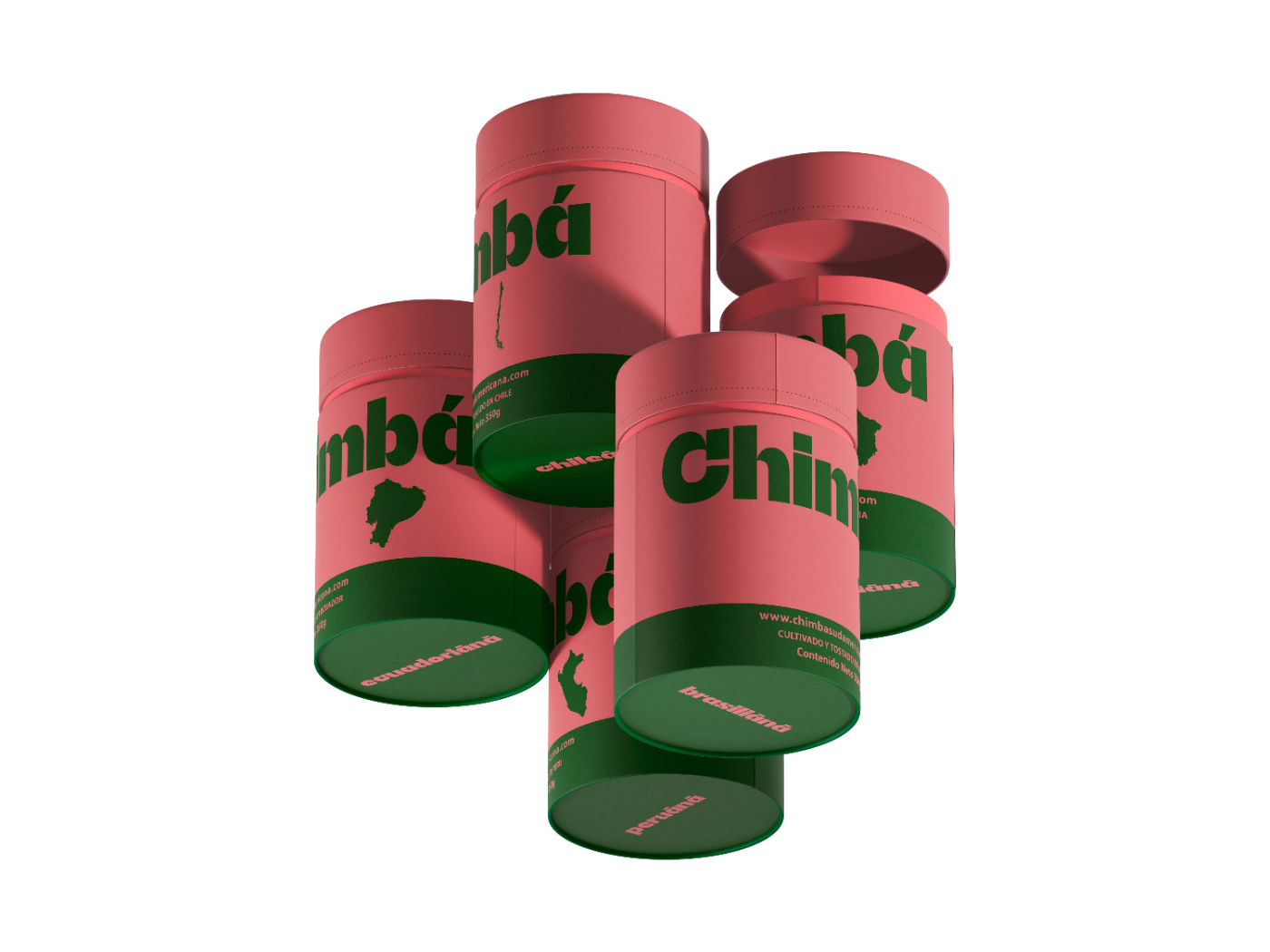
- A strong typographic wordmark: the name does the heavy lifting, with no symbol that needs explaining. It has to read from across a room and work just as well on a tube, a box or a tiny avatar.
- A green and coral-pink color system, drawn from the coffee cherry, which shifts from green to pink to red as it ripens. It's a way to talk about origin without falling back on the usual browns.
The voice ties it together: friendly, a little playful, speaking as "we". It's the same voice writing these articles, from what makes specialty coffee to the brewing guides.
Coffee packaging design: tubes, boxes and delivery
Chimbá's coffee packaging design starts from a format you rarely see on the shelf: 350 g recyclable paper tubes, holding whole bean coffee at a medium roast. A tube stands out instantly among bags, stays upright and gives the wordmark and color an uninterrupted surface to work with.
The system doesn't stop at the tube. It also covers the boxes and the delivery experience, because for many coffee brands the first real encounter doesn't happen in a store. It happens when someone opens a parcel at home. Once it's open, the coffee needs looking after like any other; here's how to store coffee beans.
From cup to shelf to feed
The core idea of the project is that every piece belongs to one system: the cup, the shelf and the feed. So the website and the Instagram grid were designed by the same rules as the packaging, with the same wordmark, the same colors and the same voice.
- The cup: the sobremesa moment that gives the brand its reason to exist.
- The shelf: tubes and boxes you can spot from a distance.
- The feed: a website and an Instagram grid that read as an extension of the packaging.
To see the full project, with images of the identity, packaging and digital pieces, take a look at the Chimbá case study on the Alkeme Design website, or read the project write-up in Romanian.
Quick questions
Is Chimbá a real coffee brand?
Chimbá is a South American coffee brand concept created by the studio Alkeme Design as a portfolio project. It covers identity, packaging, website and Instagram, all designed as a single system.
Why does Chimbá use paper tubes instead of bags?
Recyclable paper tubes stand out on a shelf full of similar-looking bags. They also stay upright and give the brand name and colors a continuous surface.
Where do Chimbá's colors come from?
The green and coral-pink system is inspired by the coffee cherry, which changes color as it ripens. It lets the brand talk about origin without relying on the earthy tones common in coffee packaging.